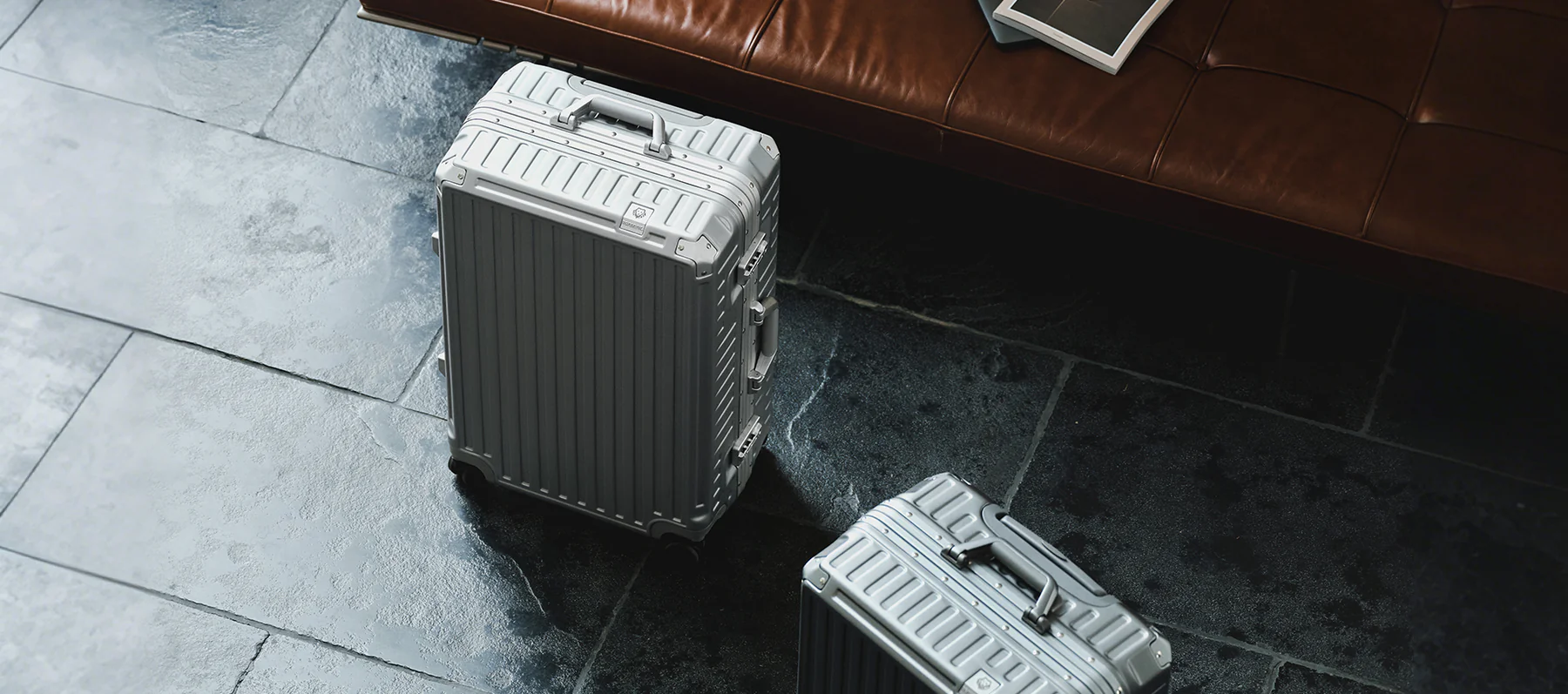
Polypropylene (PP) Luggage Manufacturer
↓
↳
Lightweight, cold-resistant polypropylene suitcases injection-moulded on two 1,500-tonne machines in Bogor, Indonesia — MOQ 100 units per SKU.
Lightweight, cold-resistant polypropylene suitcases injection-moulded on two 1,500-tonne machines in Bogor, Indonesia — MOQ 100 units per SKU.
When evaluating materials for impact-resistant travel gear, the primary advantage of Polypropylene is its exceptional ductility compared to rigid alternatives like Polycarbonate or Acrylonitrile Butadiene Styrene. Instead of fracturing under severe mechanical stress, a Polypropylene hard shell yields to the blunt force; a badly mishandled case will temporarily deform and recover its original shape rather than cracking at the point of impact. This inherent flexibility makes it uniquely suited for unpredictable global aviation baggage handling. Furthermore, Polypropylene boasts a lower physical density than its counterparts, meaning a comparable suitcase is noticeably lighter without sacrificing packing volume. When comparing standard 20-inch cabin luggage and 28-inch check-in shells, the Polypropylene variant consistently reduces the base weight. Another distinct aesthetic benefit is that the color pigmentation is integrated entirely through the molded wall. Consequently, if the exterior suffers deep scratches on a rough carousel, the abrasion does not expose a contrasting base color underneath, maintaining a pristine appearance over years of use.
However, the underlying chemical structure that grants Polypropylene its remarkable impact recovery also introduces a critical structural trade-off: the raw polymer is fundamentally softer and less inherently rigid than competing luggage plastics. To compensate for this lower stiffness and prevent bowing under external pressure, the hard shell depends entirely on strategically engineered molded ribbing and complex geometric contours to achieve the necessary rigidity. Producing these intricate, ribbed geometries requires immense clamping force and precision, which is why the manufacturing facility utilizes advanced 1,500-tonne injection molding machines to ensure every structural channel is formed perfectly without warping. Because the structural integrity of the final product relies so heavily on these architectural design choices rather than just the material alone, the precise wall thickness and the specific rib design are confirmed per order to match the client's specific durability requirements. This bespoke manufacturing approach guarantees the resulting Polypropylene luggage delivers an optimized balance of lightweight flexibility and robust structural support.
Polypropylene inherently delivers formidable resistance to a broad spectrum of acids, bases, salts, and alcohols, making it an exceptionally reliable polymer for demanding travel conditions. For luggage collections destined for humid, highly corrosive environments like the Florida coast or the Mediterranean seaboard, this superior chemical stability ensures the external shell does not degrade from airborne salinity or frequent sanitation with commercial alkaline detergents. Beyond its chemically inert nature, the material is famously fatigue-resistant. We leverage this dynamic structural elasticity at critical stress points; the molded hinge line and corner radii can endure tens of thousands of articulation cycles without developing micro-fissures. However, engineering an optimized Polypropylene shell requires careful calibration of the material's physical properties against the specific geographical realities of the destination market. Unlike Polycarbonate, traditional Polypropylene exhibits a marked decrease in impact resilience as the ambient temperature plummets. This distinct thermal sensitivity dictates that a rigorous PP manufacturing programme must be explicitly specified and adjusted according to the anticipated winter climate of the end-user.
To mitigate these specific low-temperature vulnerabilities and guarantee unyielding structural integrity across diverse transit environments, our quality assurance protocols are ruthlessly exact. The baseline factory standard mandates that the fully laden luggage must survive a 90 cm free-fall drop directly onto a solid steel plate immediately after being subjected to a rigorous −12 °C deep-freeze conditioning chamber for a continuous duration of 4 hours. This aggressively simulates the harsh physical realities of winter tarmac handling at major aviation hubs like Chicago O'Hare or Munich Airport. Further mechanical validation involves sustained pressure assessments, applying a severe 4 h static load of either 40 kg or 60 kg, which is precisely calibrated depending on the ultimate body height and volumetric capacity of the suitcase. Because injection-molded Polypropylene can vary significantly in its performance depending on the melt flow index and cooling rate, the precise wall thickness is strictly confirmed per order to perfectly balance payload durability against overall tare weight. By rigorously testing against that 900 mm loaded impact and sustained static compression, we guarantee compliance.
Polypropylene (PP) exhibits an inherent molecular flexibility that starkly contrasts with the rigid brittleness of Polycarbonate (PC). Because of this elasticity, deploying a completely flat PP panel in luggage design inevitably leads to severe warping or the dreaded "drumming" effect under the immense stacking loads experienced inside Boeing or Airbus cargo holds. To conquer this material flexibility, structural rigidity must be aggressively engineered into the suitcase through an intricate moulded rib pattern. The architectural triumph of a resilient shell dictates that manufacturers meticulously calculate the rib depth, the millimeter-precise pitch between each groove, and exactly where these structural lines terminate against the critical corner radius. Across the standard 20/24/28 inch size set, these geometric fortifications distribute impact energy away from vulnerable areas. While the overarching shell profile remains consistent across a design family, the specific wall thickness and rib depth are individually confirmed per order, ensuring that each production batch meets the stringent load-bearing expectations of the global travel market.
Understanding the factory consequence of this ribbed architecture is vital for international procurement teams, primarily because the exact rib geometry is permanently carved into the hardened steel cavity of the injection machine. Any desire to change the visual line pattern requires abandoning the current setup and commissioning a brand-new tool. This heavy industrial process operates on a strict timeline requiring roughly 80 days total: a high-speed CNC phase taking 10 days for steel cutting, followed by 25 days for international transit and fine fitment, culminating in 45 days of mass production scaling. Fortunately for agile brands, adjusting the core wall thickness and injecting custom Pantone resin colours can be executed dynamically without investing in new tooling. Backed by a high-volume manufacturing capability that outputs 80,000 units/month, our assembly infrastructure accommodates these non-tooling modifications with zero disruption. By locking in the steel mould geometry early, brands can continuously refresh their seasonal collections through color and thickness variations while maintaining the proven structural integrity of their PP luggage series.
While Polypropylene is universally celebrated as a premier hard-shell polymer, its exceptional strength-to-weight ratio makes it equally indispensable in soft-shell and hybrid luggage programmes. Modern luggage engineering frequently utilizes injection-moulded PP for internal structural frames, protective corner pieces, and robust trolley housings that support lighter fabrics. In the highly specialized hybrid category, manufacturers seamlessly integrate a flexible fabric front body with a solid, moulded PP back panel or perimeter frame. This ingenious construction preserves the traditional, accessible aesthetic of a fabric suitcase while providing a rigid, protective spine that prevents structural collapse under heavy transit loads. Because the polymer naturally resists stress fractures and absorbs impact, a hybrid case utilizing a Polypropylene chassis delivers the protective benefits of a hardside model without the cumbersome weight penalty of a full hard shell. Engineering these hybrid components requires the exact same precision tooling processes used for our full-case models, ensuring that every plastic contour flawlessly aligns with the soft textile elements.
Transitioning these complex hybrid designs from concept to production involves rigorous oversight and standardized manufacturing parameters across the entire supply chain. Our facilities maintain strict quality assurance protocols for every Polypropylene component, deploying comprehensive IQC, IPQC, and OQC inspection stages to verify dimensional accuracy before the polymer frames are stitched to the nylon or polyester bodies. To accommodate brands looking to test new hybrid lines or expand their soft-shell offerings, we maintain an accessible Minimum Order Quantity of precisely 100 pcs per SKU, which is strictly counted per individual colour multiplied by size. Clients initiating a custom hybrid project can expect prototype sampling to require between 7 and 15 working days, allowing ample time for structural testing and textile integration adjustments. Once the final prototype is approved, the main manufacturing run for bulk orders will be systematically completed within a reliable 25 to 55 working days. This timeline ensures that every composite piece meets our exacting standards before international distribution.
Initiating a Polypropylene programme requires precise documentation from the buyer. To secure an accurate quotation, procurement teams must submit their targeted dimensions, typically selecting among the standard 20, 24, and 28 inch configurations. The specification sheet should define the Pantone colour masterbatch reference, preferred surface texture, and the primary closure type. Furthermore, the dossier needs to outline the branding method, carton mark instructions, and the intended destination market. Identifying this geographic destination is critical for our engineers to formulate the exact PP blend, ensuring the shell meets the necessary cold-performance expectations for environments like Scandinavia. Finally, detailing the target retail price band allows the factory to align component selection with your commercial strategy.
When transitioning to active production, project managers must account for standardized manufacturing timelines. The baseline expectations for custom PP collections operate under specific constraints:
Beyond these parameters, the technical architecture is finalized during the formal contract stage. Variables such as wall thickness, internal rib depth, polyester lining weight, and acceptable AQL values are strictly confirmed per order. The procurement agreement will also solidify the tiered pricing structure, payment terms, trade terms, and ultimate mould ownership rights. If your enterprise requires full-scale product creation, explore our comprehensive Luggage ODM capabilities. To submit your technical pack and request an initial quotation, please reach out to our Contact department directly.
Does polypropylene crack or deform when a case is dropped? Polypropylene exhibits high impact resistance, absorbing shocks to protect contents. During testing, it withstands a 900 mm loaded drop onto a solid steel plate without structural failure. While it may flex temporarily under stress, it resists permanent deformation. Furthermore, the material resists most acids, bases, salts and alcohols. Final drop test specifications and other exact performance characteristics are always confirmed per order.
Why does a PP case need ribbing? Ribbing provides necessary structural rigidity to the enclosure without adding excessive weight. The specific rib geometry is cut directly into the steel cavity during manufacturing. Creating a new tool requires ≈80 days total to complete. To ensure optimal strength characteristics, the exact wall thickness and precise rib depth are carefully calculated and ultimately confirmed per order based on requirements.
How does PP perform in cold climates? Polypropylene maintains reliable durability even when exposed to freezing temperatures, preventing the plastic from becoming dangerously brittle. Our rigorous thermal testing protocols include conducting a successful 90 cm drop after 4 h at −12 °C. Any additional environmental tolerances, extreme weather endurance ratings, or specialized cold climate testing requirements for your specific application are strictly confirmed per order.
Can PP be used for a soft-shell or hybrid case? Yes, moulded PP frames, corner pieces and trolley housings are used extensively within soft-shell and hybrid programmes. This sturdy plastic material provides essential structural integrity to otherwise flexible baggage designs. Any alternative applications or specialised internal components involving this polymer within your custom collections must always be confirmed per order prior to manufacturing.
What is the MOQ and how is it counted? The standard requirement is an MOQ 100 pcs per SKU. This specific volume is strictly counted per colour × size combination. If your project demands different quantities, unique variations, or alternative batch arrangements outside these standard parameters, exact details must be confirmed per order. We evaluate all customized volume requests independently to ensure accuracy and maintain our strict manufacturing standards.
How long does sampling and bulk production take? Typically, our standard sampling 7–15 working days is required, while full bulk 25–55 days will be necessary for final completion. This complete manufacturing timeline includes rigorous IQC / IPQC / OQC inspection stages to ensure consistent reliability. Any expedited shipping requirements, seasonal holiday impacts, or unusual scheduling adjustments beyond these estimates must be formally confirmed per order.
