Polycarbonate (PC) Luggage Manufacturer
↓
↳
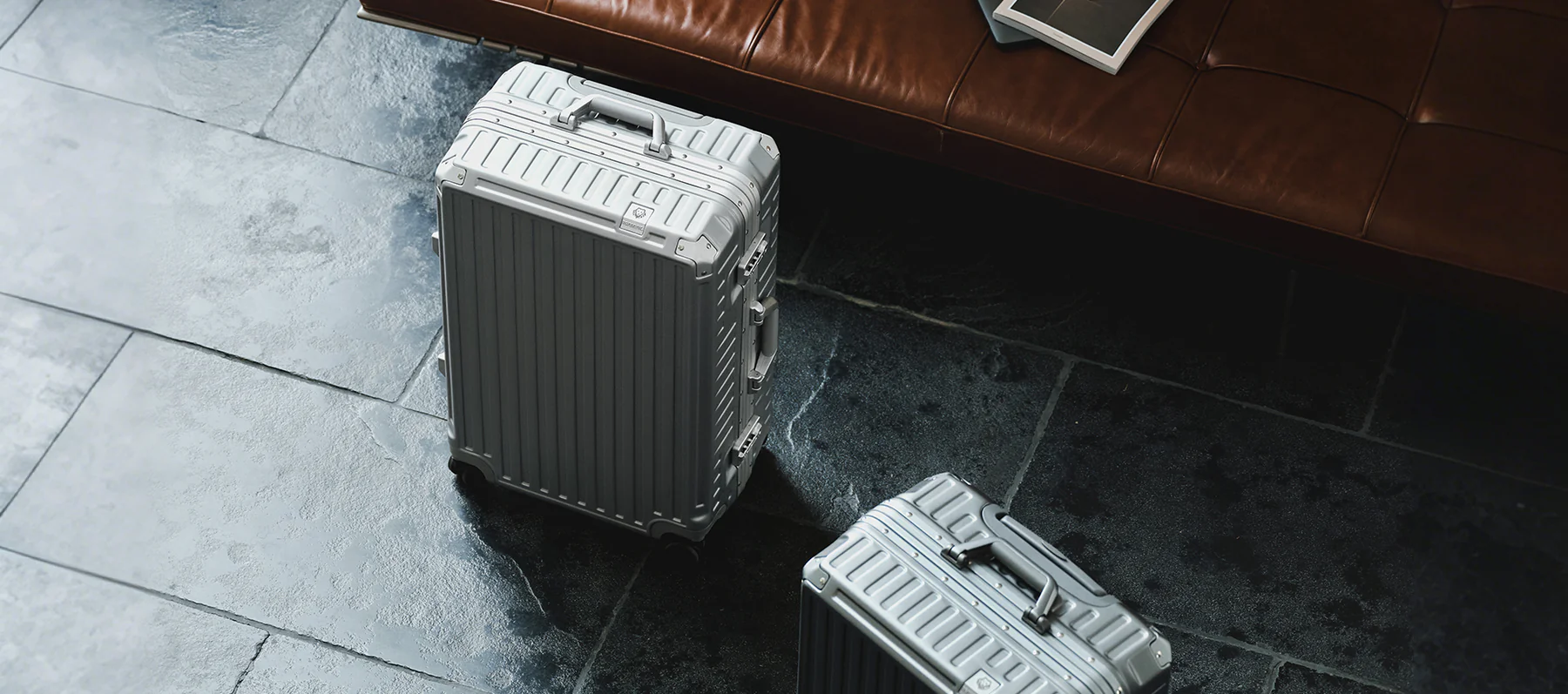
High-impact Covestro polycarbonate suitcases moulded in-house on 1,500-tonne machines in Bogor, Indonesia — fitted with YKK zippers and SilentMove spinner wheels.
High-impact Covestro polycarbonate suitcases moulded in-house on 1,500-tonne machines in Bogor, Indonesia — fitted with YKK zippers and SilentMove spinner wheels.
Specifying a distinct Covestro polycarbonate grade fundamentally dictates the physical dynamics on our factory floor, acting as the primary variable that separates a generic extrusion from a precision-engineered travel asset. The most critical downstream impact lies in the melt flow index, which directly decides how cleanly and uniformly a massive 28-inch shell fills inside a 1,500-tonne injection molding machine. When the polymer flows with optimal viscosity, it guarantees strict wall consistency across complex geometries, preventing the heavy corner pooling that typically ruins the net weight of larger cases. This exact material science applies equally to our compact 20-inch cabin cases, ensuring that the structural integrity remains uncompromised despite the thinner profile. Because our manufacturing matrix scales to a volume of 80,000 units/month, establishing the absolute correct resin flow behavior prevents thousands of rejected units and guarantees that every single batch achieves the rigorous dimensional tolerances required by global aviation standards. The baseline performance is locked in by the polymer’s thermal properties, allowing the finished product to easily survive the brutal atmospheric shifts of an aircraft cargo hold, maintaining high impact resistance across an extreme −40 → 120 °C operating range.
Beyond purely mechanical performance, the specific Covestro resin classification fundamentally alters the visual and tactile reception of the final luggage piece, defining how light interacts with the engineered surface. The selected grade governs the maximum achievable colour depth, determining whether a brand's signature aesthetic renders as an impenetrable solid, a high-refraction metallic, or a sophisticated translucent finish that reveals the internal chassis. This chemical baseline also dictates how effectively the exterior absorbs and holds proprietary micro-dot or brushed textures applied during the molding phase, which are vital for concealing the inevitable scuffs accumulated during international transit. Because aesthetic demands and protective requirements vary wildly across different retail demographics, the specific resin grade and exact wall thickness are meticulously confirmed per order before any industrial tooling begins. By pairing German-engineered raw materials with our precision calibration protocols, we ensure that the aesthetic brilliance of the case is permanently fused to a polymer matrix that resists environmental degradation, UV bleaching, and extreme mechanical stress.
The defining characteristic of a upper-tier Covestro PC shell is its extraordinary ability to absorb kinetic energy across an extreme temperature envelope, remaining fully operational from a blistering 120 °C down to a freezing −40 °C. For travelers relying on long-haul checked luggage, the cargo hold of an airliner can plunge to frigid temperatures that turn lesser plastics brittle. Polycarbonate, however, retains its vital elasticity even in deep cold, flexing rather than shattering upon unexpected impact. To guarantee this resilience, our manufacturing protocol enforces rigorous physical trials. Each prototype must survive a grueling 900 mm loaded drop directly onto a solid steel plate at standard room temperature. This is immediately followed by a thermal shock phase, where the casing is chilled for exactly four hours at −12 °C before facing another punishing 90 cm drop test. By ensuring the structural integrity survives these hostile extremes, we provide peace of mind that a suitcase subjected to careless tarmac handling in the dead of winter will arrive on the baggage carousel completely intact and free of catastrophic fracturing.
Beyond abrupt impact resistance, sustained structural support and dynamic mobility are equally critical for a reliable travel companion. Our factory mandates a strenuous four-hour static load test to simulate heavy stacking scenarios during prolonged transit. For compact to mid-sized cases featuring 535–660 mm bodies, we apply a continuous 40 kg weight, while the larger 685–835 mm bodies must withstand a crushing 60 kg load without exhibiting permanent deformation. Moving from static compression to active endurance, the rolling hardware is subjected to equally uncompromising standards. The integrated SilentMove 360° wheels are mounted on a mechanical treadmill and forced through punishing 8 + 2 + 2 km drum runs. After this extensive rolling gauntlet, engineers measure the urethane tread to confirm that surface wear strictly remains at or below 2 mm. Furthermore, the mobility system must conquer 25 consecutive 200 mm loaded steps, mimicking the jarring shocks of urban staircases and uneven cobblestone streets. Together, these meticulous evaluations certify a seamless, durable transit experience across any continent.
Selecting the correct hardshell material is fundamentally driven by your target retail price and expected baggage handling exposure, rather than an arbitrary universal search for the singular "best material." For upper-tier long-haul collections and demanding cold weather markets like Northern Europe or Canada, investing in 100% Covestro PC delivers unparalleled impact resistance and actively prevents stress cracking under severe freezing conditions. However, if your brand targets the highly competitive mid-market segment where financial balance is essential, an extrusion-layered ABS+PC blend provides excellent scratch resistance and necessary structural integrity while intelligently reducing raw material expenditures. For enterprise buyers prioritizing maximum flex, lightweight profiles, and exceptional chemical resistance at a significantly lower unit cost, polypropylene stands out as a highly viable manufacturing alternative. We manufacture all of these distinct formulations across the standard 20, 24, 26, and 28 inch sizes. To explore hybrid constructions explicitly designed for retail versatility, review our PC/ABS luggage collections which practically demonstrate how engineered layering optimizes both exterior aesthetics and long-term durability.
Once you have firmly matched the shell compound to your consumer price point, DJI Luggage seamlessly integrates your executive decision directly into a highly predictable manufacturing schedule. Regardless of whether you select top-tier polycarbonate or transition to high-flex alternatives, our baseline production minimum remains accessible. We require a standard MOQ 100 pcs per SKU, which is strictly counted per colour × size to accommodate diverse inventory planning. Translating your initial technical packs into fully functional physical prototypes takes approximately 7–15 working days for sampling, allowing sufficient time to rigorously evaluate shell resilience and trolley component alignment. Upon final sample approval, full bulk execution spans between 25–55 days depending on the chosen molding complexity and prevailing peak seasonal loads. If your current product roadmap necessitates a decisive shift away from polycarbonate entirely to capture the entry-level travel demographic without compromising on essential durability, explore our comprehensive PP luggage catalog. We ensure that every production run strictly adheres to your specified market positioning and critical retail margin requirements.
Integrating robust components onto a flexible polycarbonate shell requires precision engineering to prevent long-term stress cracks. Rather than simply punching arbitrary holes into flat surfaces, our tooling engineers design dedicated mounting points directly into the mould. For instance, authentic YKK zipper tracks are meticulously seated into a precisely prepared channel that distributes tension evenly across the perimeter when the suitcase is overpacked. Similarly, the dynamic mobility system relies on SilentMove 360° wheel housings that are securely bolted through a strategically reinforced corner rather than a standard thin wall. This architectural reinforcement ensures that the kinetic energy from rough cobblestone streets transfers harmlessly into the rigid frame. The multi-stage telescopic trolley tubes are strictly seated into heavily moulded ribs running down the back profile of the luggage, providing exceptional torsional rigidity while preserving maximum internal packing capacity. By casting these structural anchors directly into the polycarbonate resin during the vacuum forming phase, the risk of micro-fracturing around high-load areas is eliminated.
Mounting secure closure systems demands an equally meticulous approach, guaranteeing that heavy-duty latch mechanisms or integrated TSA lock seats are positioned exclusively on a reinforced plateau rather than a vulnerable flat panel. During the foundational consultation for your order, precise parameters such as the mandated lock brand and optimal wall thickness are strictly confirmed to guarantee flawless component compatibility. Once mass production commences, our rigorous quality assurance framework takes over the factory floor. Comprehensive IQC protocols rigorously verify all incoming hardware tolerances, while continuous IPQC monitoring checks the mechanical alignment of every single fixture during the assembly line phase. Finally, exhaustive OQC inspection consistently catches any microscopic misalignment or torque inconsistency before the upper-tier luggage ever reaches the shipping carton. This uncompromising trifecta of quality control ensures that whether your product architecture calls for standard 3-digit combination locks or advanced latching systems, every hardware element seamlessly complements the resilient polycarbonate shell, yielding a formidable product ready for transit.
When a buyer prepares to quote a new Covestro polycarbonate collection, outlining precise parameters ensures accurate costing. Procurement teams typically begin by selecting standard dimensions, often choosing among 20, 24, 26, and 28 inch formats. Aesthetic choices define the visual identity, requiring decisions regarding solid, metallic, brushed, or matte finishes. Furthermore, specifying the preferred closure type, exact branding method, required carton mark details, and the intended target retail price band allows the factory to align manufacturing with market positioning. For comprehensive development solutions, clients can explore our luggage ODM services.
Establishing baseline commercial terms is equally crucial for these upper-tier luggage programmes. Our standard agreement features a minimum order quantity of 100 pieces per SKU, which is calculated strictly per colour multiplied by size. Once specifications are approved, prototyping proceeds rapidly, with sampling requiring 7 to 15 working days. Transitioning to mass production, bulk manufacturing typically spans 25 to 55 working days. If custom shell designs are necessary, developing a completely new tool demands approximately 80 days total. This extensive tooling timeline breaks down systematically into 10 days for initial cutting, 25 days for transit and structural fitment, and 45 days dedicated to final mold production.
To initiate a customized quotation or discuss your next 2024 manufacturing run, please reach out via our contact page.
Which Covestro grade do you mould and who confirms it? The exact specification is confirmed per order depending on your specific requirements. While the overarching temperature resistance spans −40 → 120 °C, the precise material parameters, including the designated Covestro Makrolon grade, are finalized during the quoting phase. Independent testing laboratories or your designated quality control teams can verify the authenticity of the resin through rigorous inspection prior to production.
How does a polycarbonate shell perform at −12 °C? Polycarbonate exhibits outstanding impact resistance even in freezing environments. We validate this through a rigorous 90 cm cold drop test. Specifically, a fully loaded shell is chilled for 4 h at −12 °C and then dropped directly onto a solid steel plate. This ensures the luggage will not crack or shatter during winter travel, demonstrating superior low-temperature durability compared to standard plastics.
Is a PC shell heavier than ABS or PP at the same size? Weight comparisons are always confirmed per order based on thickness, but polycarbonate generally offers an excellent strength-to-weight ratio. For structural integrity across our 20, 24, 26, and 28 inch sizes, a PC shell easily handles a 4 h static load of 40 kg for 535–660 mm models, or 60 kg for 685–835 mm models, keeping the final product both incredibly tough and lightweight.
Can a PC shell take a metal frame or a zipperless latch? Yes, our shells easily integrate with custom zipperless closures or reinforced aluminum framing. The exact mounting hardware and latch specifications are confirmed per order. Any exposed metallic components, including frames and latches, undergo a 16 h salt spray evaluation in accordance with ISO 9227 and ASTM B117 standards. Furthermore, integration points withstand rigorous wheel runs spanning 8 + 2 + 2 km, ensuring wear ≤2 mm.
What is the MOQ and how is it counted? Our standard minimum order quantity stands at 100 pcs per SKU per colour × size. For instance, if you require a specific shade across the 20, 24, and 28 inch dimensions, each distinct size in that shade requires a minimum of 100 units. Any alternative minimums for custom extrusions or highly specialized hardware attachments must be confirmed per order before proceeding.
How long does sampling and bulk production take? Creating an initial prototype or sample generally requires 7–15 working days following design approval. Once the sample is signed off and the deposit is secured, standard bulk manufacturing demands 25–55 days. These timelines accommodate our extensive quality control checks, including the 900 mm loaded drop onto a solid steel plate and complex wear tests like 25 × 200 mm loaded steps.
